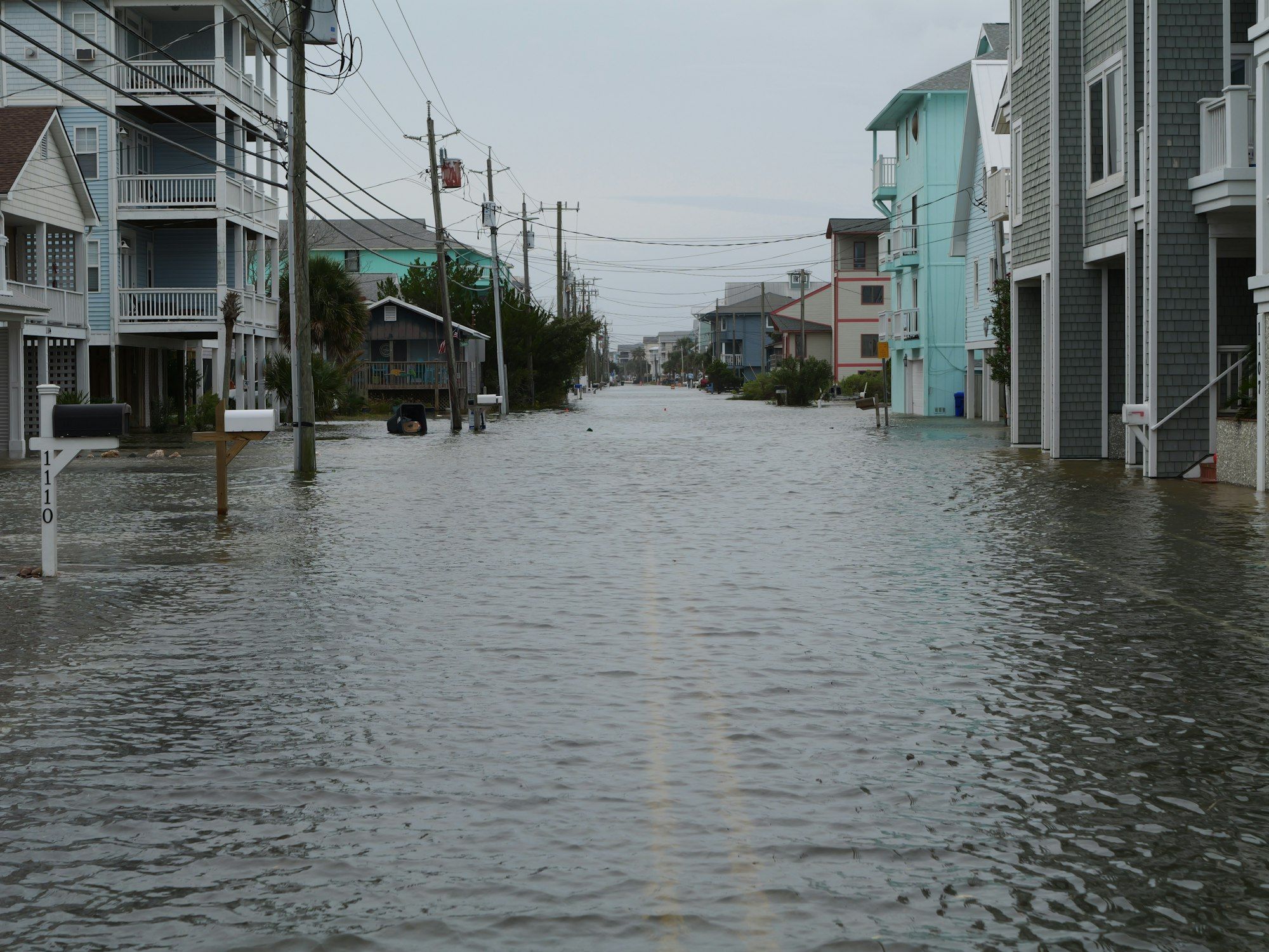
How storms damage coastal homes
New Hanover, Pender, Brunswick and Onslow counties sit in one of the most hurricane-exposed stretches of the East Coast. Storms like Fran (1996), Floyd (1999), Florence (2018) and Isaias (2020) have each left their mark on the region. Storm damage usually comes from a combination of:
- Wind: lifted or missing shingles, damaged flashing, broken windows and doors, and fallen trees that open the roof or walls.
- Wind-driven rain: water forced in around windows, doors, vents and soffits, even when nothing is visibly broken.
- Storm surge: ocean and sound water pushed inland, especially on barrier islands and low-lying areas near the waterfront.
- Inland flooding: slow-moving storms can drop huge amounts of rain, and rivers like the New and Cape Fear can stay high for days afterward.
- Power outages: without air conditioning, homes heat up and humidity climbs fast, which speeds up mold growth on anything wet.
After the storm: a step-by-step checklist
- Return only when it's safe. Follow local emergency management instructions.
- Check for hazards. Watch for downed power lines, gas smells, standing water near electrical systems and structural damage. Don't go in if you're unsure.
- Document everything with photos and video before moving or removing anything, inside and out.
- Prevent more damage if you can do it safely: tarp the roof, board broken windows, and move belongings away from leaks. Keep receipts.
- Report the claim to your insurer (or insurers: homeowners, wind and flood can be separate).
- Start drying quickly. Wet materials need to be dried or removed within 24 to 48 hours to limit mold.
- Get the damage assessed. A restoration crew can find hidden moisture in walls, ceilings, attics and crawl spaces.
Never run a generator indoors or in a garage. The CDC warns that carbon monoxide from generators can kill quickly; keep them outside and away from doors and windows.
What storm damage restoration includes
- Emergency board-up and tarping to close openings in the roof, walls and windows
- Water extraction and drying for roof leaks and wind-driven rain. See water damage restoration.
- Flood cleanup for rising water, including removal of contaminated materials. See flood cleanup.
- Mold inspection and remediation for growth that appears after the storm. See mold remediation.
- Crawl space and attic drying, where storm water often hides
- Documentation such as photos and moisture readings to support insurance claims
Mold after a hurricane
The weeks after a hurricane are prime time for mold in coastal North Carolina: lots of wet building materials, high heat and humidity, and often no power for air conditioning. Mold commonly shows up in walls that took on water, in attic insulation under a roof leak, and in crawl spaces where water pooled. If your home got wet during a storm and you notice a musty smell later, have it checked. Learn more about crawl space mold.
Storm damage and insurance
Coastal storm claims are often complicated. Some general points:
- Wind and flood are usually separate. Damage from wind and wind-driven rain is generally handled under a homeowners or wind policy. Rising water is generally handled under flood insurance.
- The Beach Plan. Many coastal homeowners get wind and hail coverage through the North Carolina Insurance Underwriting Association, separate from their main policy.
- Named-storm or hurricane deductibles are often a percentage of your dwelling coverage, which can be much higher than your usual deductible.
- Prevent further damage. Policies typically expect reasonable steps, like tarping, to stop damage from getting worse.
- Keep records of photos, receipts, contractor estimates and every conversation with your insurer.
This is general information, not legal or insurance advice. Talk with your agent about your specific policies.
Before the next storm
- Review your policies before June 1, including your hurricane deductible and whether you have flood insurance.
- Take a walk-through video of your home and belongings now, for your records.
- Clean gutters, trim trees, and secure outdoor items.
- Know where your main water shutoff and electrical panel are.
- Save a number for fast restoration help, like (910) 555-0100, in your phone before the storm.
Storm damage service areas
Vetted local crews help after storms throughout New Hanover, Pender, Brunswick and Onslow counties, including:
- New Hanover County: Wilmington, Carolina Beach
- Pender County: Hampstead, Surf City, Burgaw
- Brunswick County: Leland, Southport
- Onslow County: Jacksonville, Sneads Ferry, Holly Ridge